
From Manual Orders to $2.5MM in Online Sales
Modernizing a 70-year-old distributor’s order process without losing the sales relationships that built it.
Our client was a $100M frozen food distributor with more than 70 years in business, built entirely on personal relationships and manual process. Sales reps took orders on paper bubble sheets. Admin staff keyed each one into a decades-old system by hand. Payments were made in envelopes, handed off in-person.
$0-$2.5MM
Generated online in under two years
0%
Human error eliminated through automated online system
Problem
That process had worked for 70 years. But it gave customers no way to discover new products, no way to place a standing order without calling a rep and left the business exposed if a more modern competitor made ordering easier. Manual keying meant errors were routine. The business also had no digital presence to speak of.
Approach
Strategy & Discovery
I led an end-to-end analysis of the order process. Working with sales reps, admin staff and customers, I ran contextual interviews and built service blueprints to map how orders actually moved through the business, from a phone call to a filled crate.
The mandate was to modernize without breaking the trust the sales relationships had built over decades.
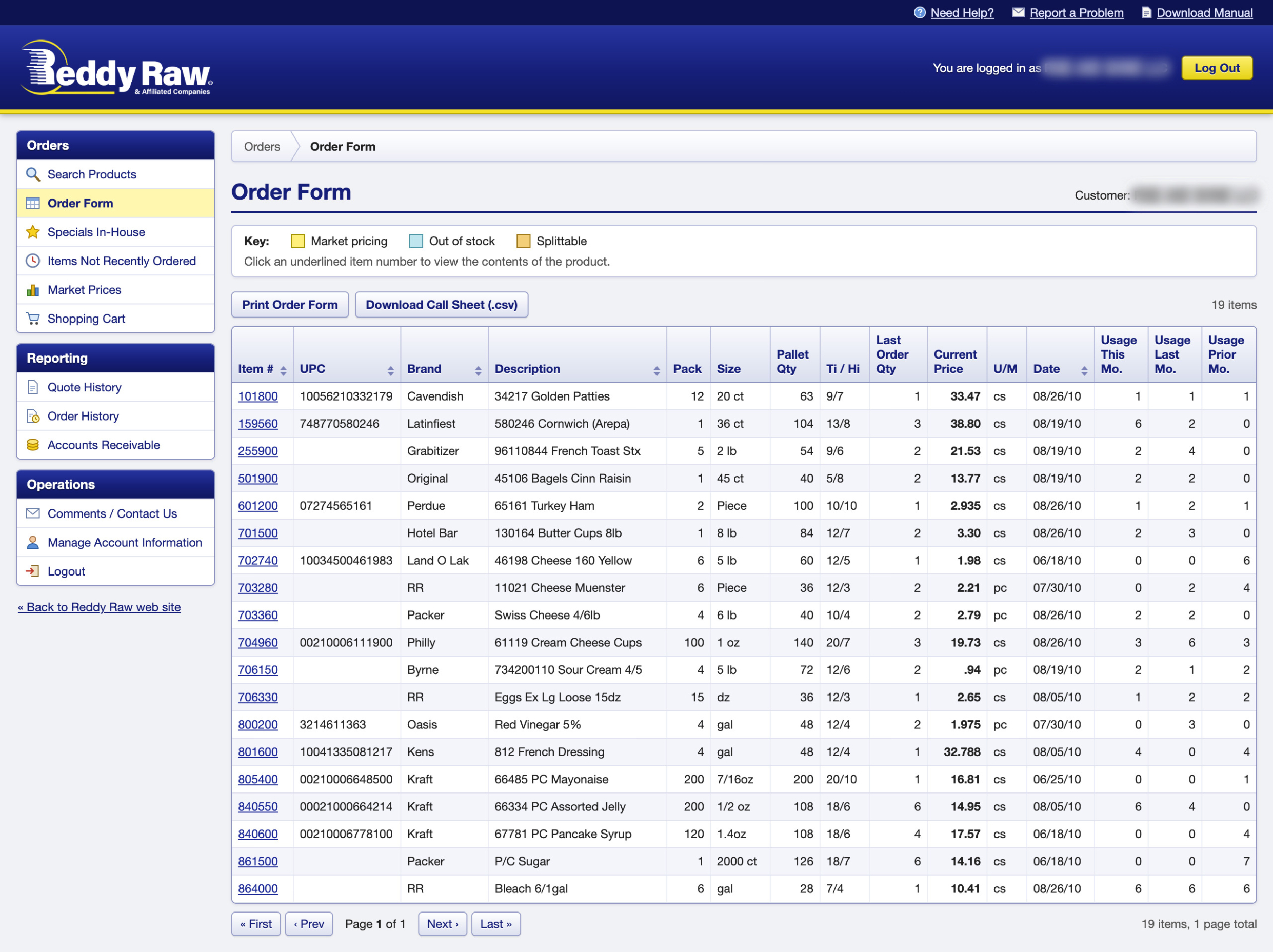
The paper bubble sheet moved online with three months of usage beside every item
Product & Platform Design
I designed a custom ecommerce platform and built the front end. My co-founder built the backend. The platform gave customers:
- Real-time order submission
- Standing and one-time orders
- Self-service account management
- Full catalog browsing with keyword search
- Seasonal promotions
- Delivery time-slot tracking.
The new platform also eliminated the keying errors that came with manual entry.
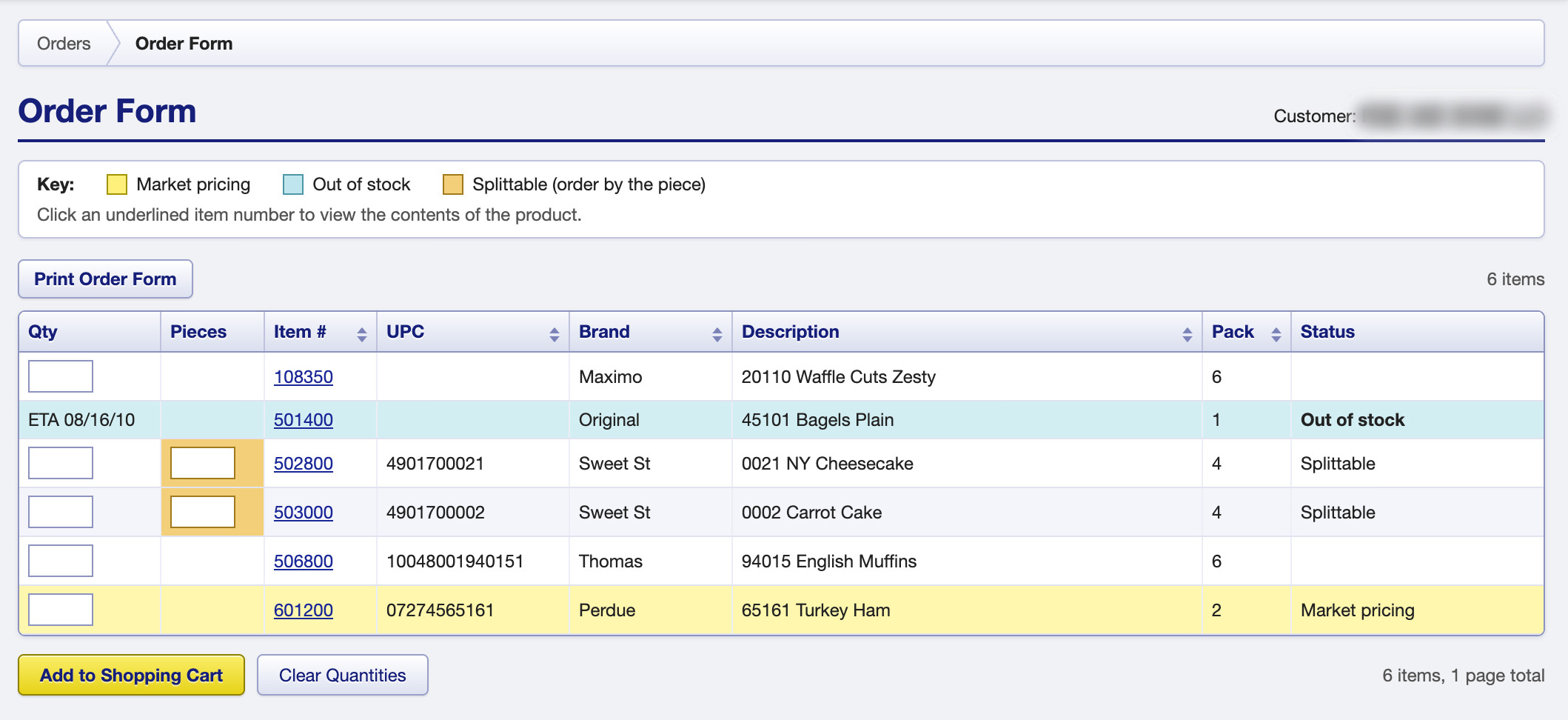
The 2010 order form. Customers entered quantities where they could also see stock status, split cases and market pricing. I rebuilt this screen for mobile in 2026.
Customer Experience
Most of the client’s own customers were old-school, mom-and-pop diners who had never ordered anything online. I designed the platform for the computers they already had, which usually meant an aging desktop or a beat-up laptop in a back office. Asking a longtime customer to change how they’d ordered for twenty years only works if the new way is actually easier.
I built the platform to sit alongside the existing sales relationships. The trust those reps had built over decades was the real asset worth protecting.
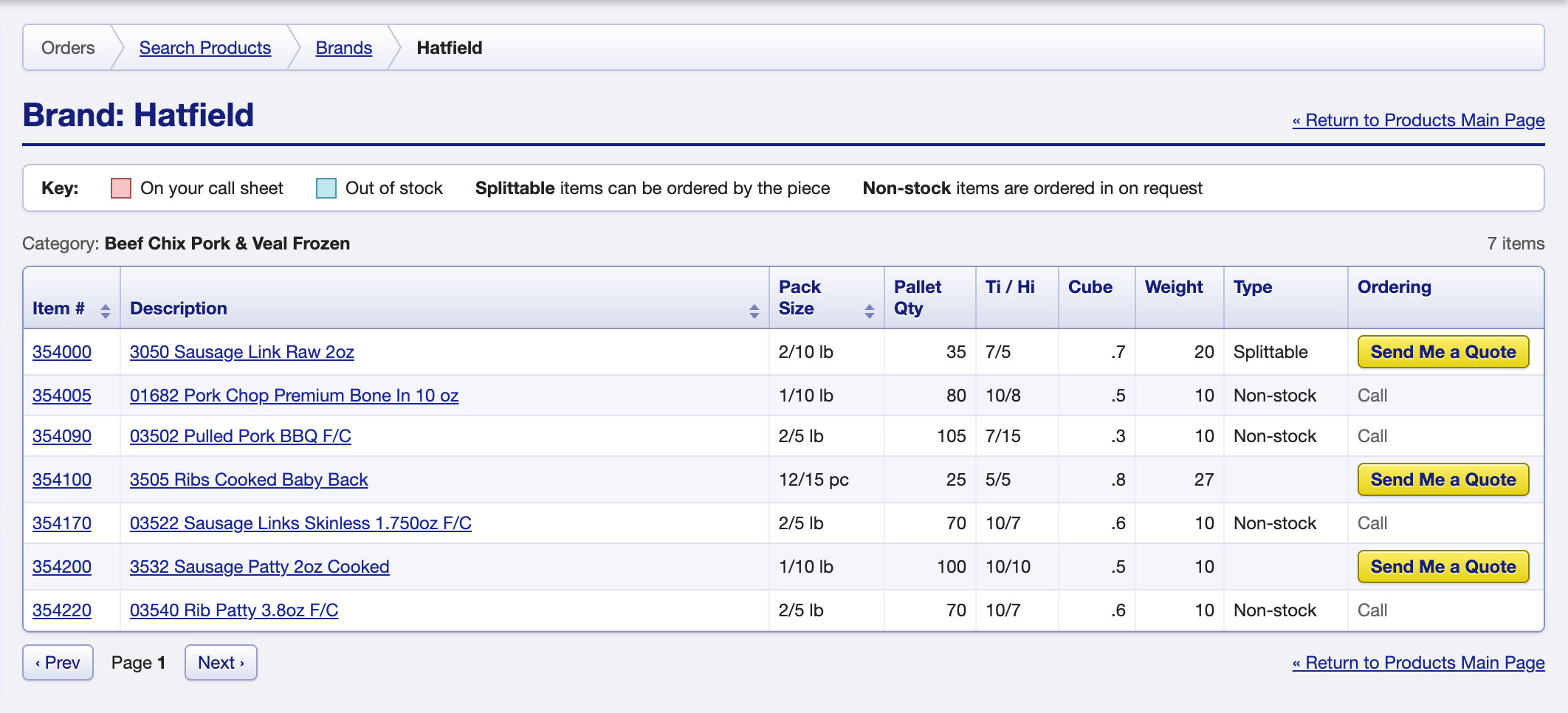
Stocked items offer a quote and non-stock items say Call. The rep stayed in the loop by design.
Leadership & Obstacles
Sales reps were against the idea from the start. They’d spent years building relationships order by order, call by call. A self-service platform looked like it would cut them out of that.
Once the platform launched, order volume and average order value went up. Customers who had ordered the same items out of habit for years started browsing the full catalog and trying new products once ordering took a few clicks.
The reps who had fought it hardest ended up spending less time on paperwork and more time on the relationships that had built their business in the first place.
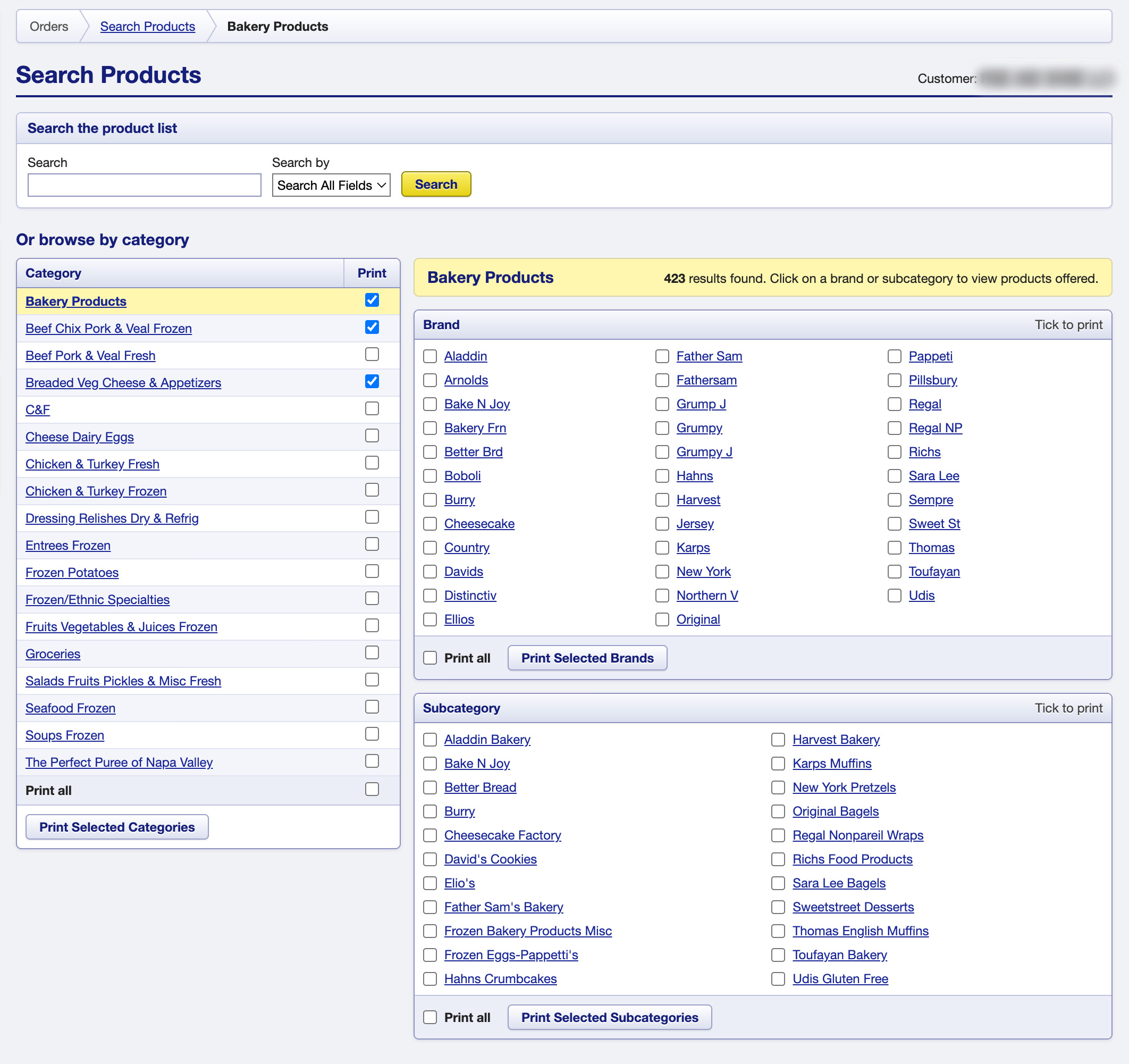
18 categories and 423 products in bakery alone. Most customers had never seen the full list on paper.
Why It Mattered
This 70-year-old distributor didn’t need to gamble on what already worked to compete in a digital market. It needed proof, and that proof came from the sales reps themselves. Once they saw their own order volumes climb, the platform they had fought against became the one they relied on.
What this order form looks like in 2026
Sixteen years later I rebuilt this order form as a mobile-first interactive prototype with Claude. The original lesson still drives it: customers order more when they can see everything available.

2026 mobile-first redesign of the order form, prototyped with Claude.