
Pando: From Design System to Core Product Infrastructure
Role: Director of Product Design
Company: Pluralsight
Sector: SaaS, EdTech, Design Systems, Executive Leadership
The Real Challenge: Making the Case Where Design Has No Home Field Advantage
The hardest part of design systems leadership isn’t building the system. It’s making the case for it in rooms where design doesn’t have a natural language advantage.
Executives don’t respond to component libraries and token hierarchies. They respond to delivery risk, business consequence and investment ROI. If you walk into an executive conversation speaking designer, you walk out empty-handed. This is the story of what happens when you don’t.
The Situation
Pando was succeeding. Adoption was growing, trust was being rebuilt and teams were delivering faster. But the operating model hadn’t caught up with what Pando had actually become.
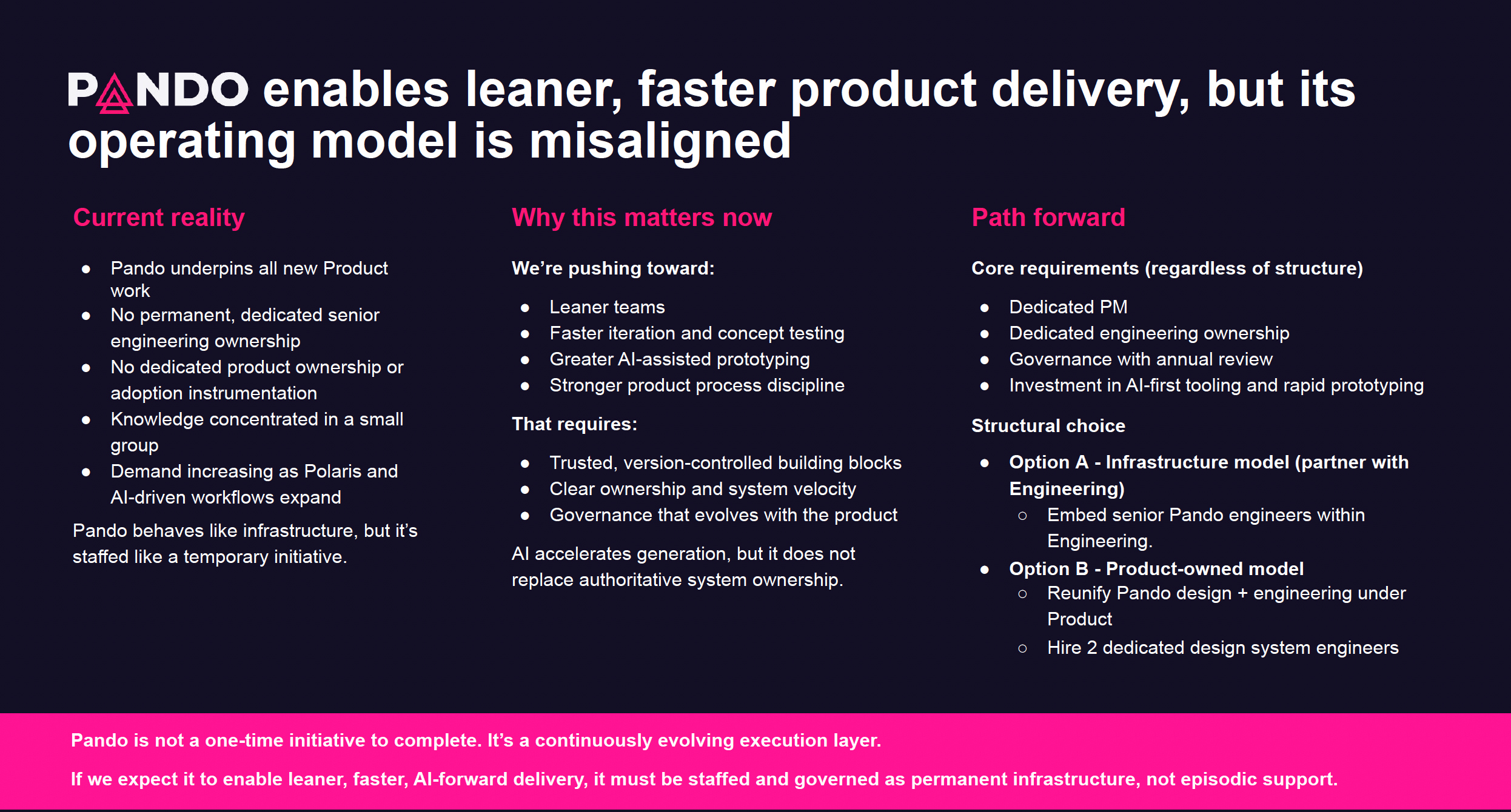
A system underpinning all new product development was being staffed and governed like a temporary initiative. There was no dedicated engineering support with real experience on the problem, no product management function and no formal org-wide migration strategy. Pando was doing the work of core infrastructure while being resourced like a design team side project.
Closing that gap meant making the case at the executive level.
The Approach: Leading With Business Language
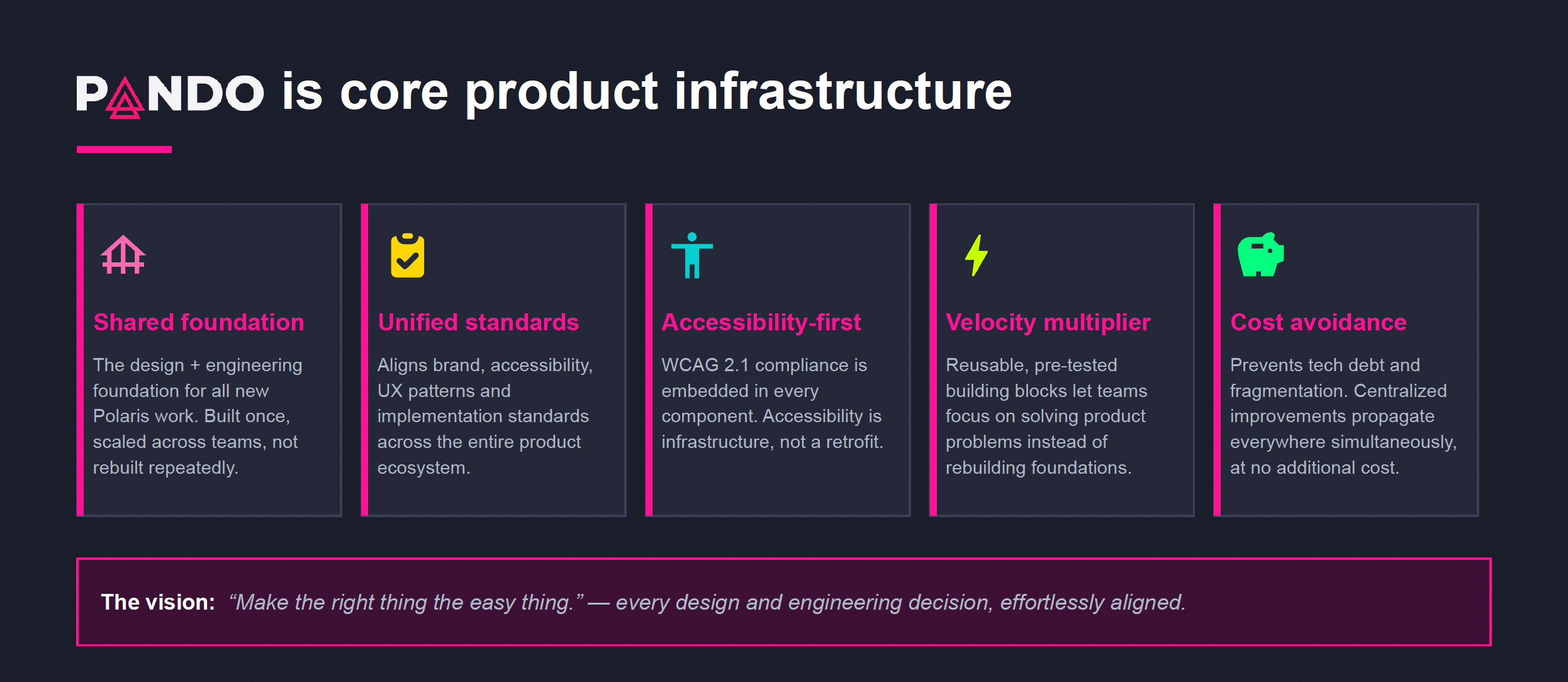
I built the case around business risk, delivery efficiency and a concept that’s easy to miss: the value of a design system isn’t realized tomorrow. It compounds. The teams that invest now are the ones who ship faster, with less rework, a year from now. That long-term framing is what separates an infrastructure argument from a feature request.
- Documented the consequence curve showing what continued underinvestment would cost in velocity, quality and adoption over time
- Framed Pando as product infrastructure, not a design deliverable, comparable to the systems engineering depends on to ship
- Quantified the adoption gap and the risk of teams continuing to build outside the system
- Mapped the staffing model needed including experienced engineering leadership, a PM function and a formal migration strategy
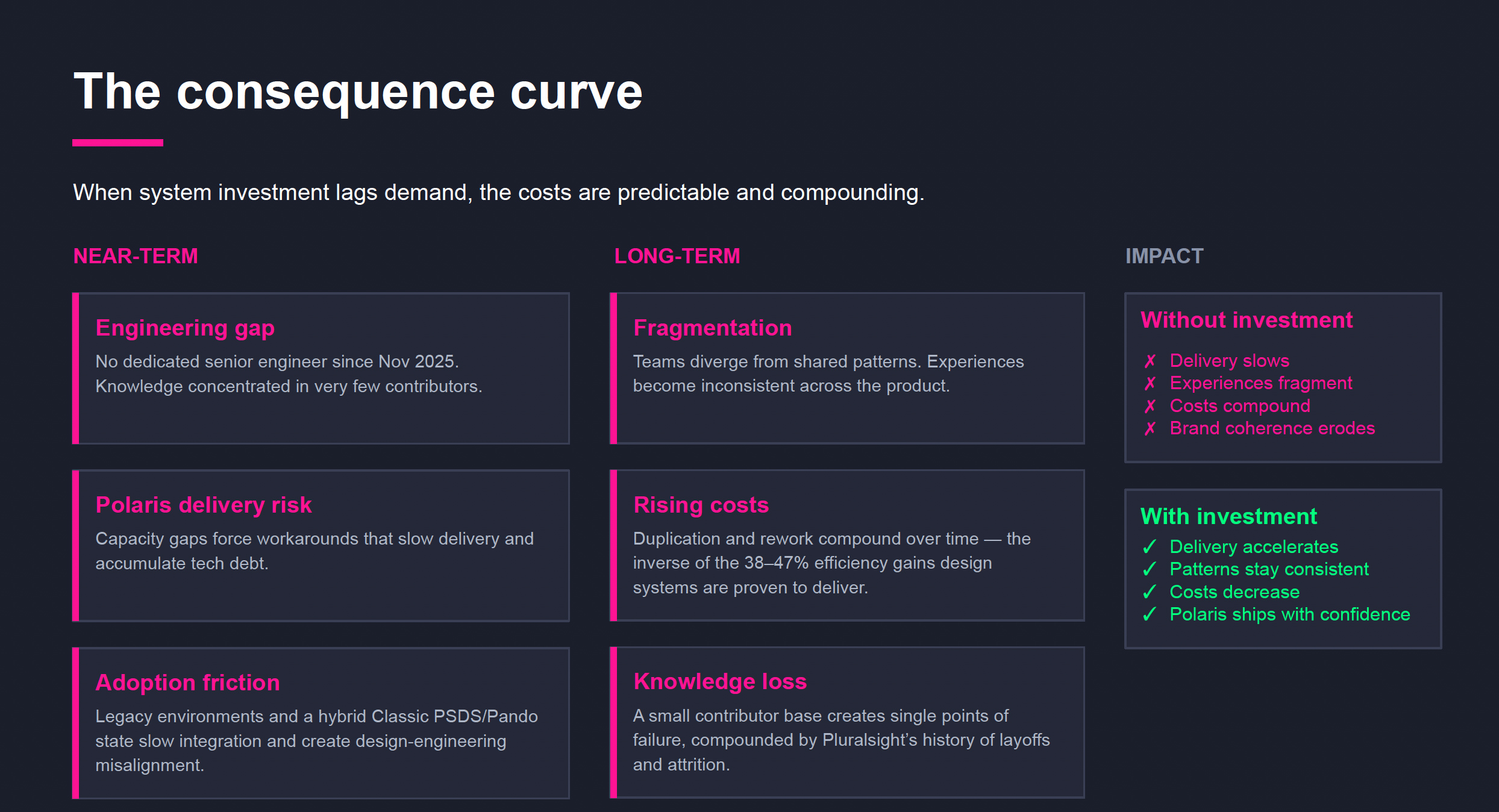
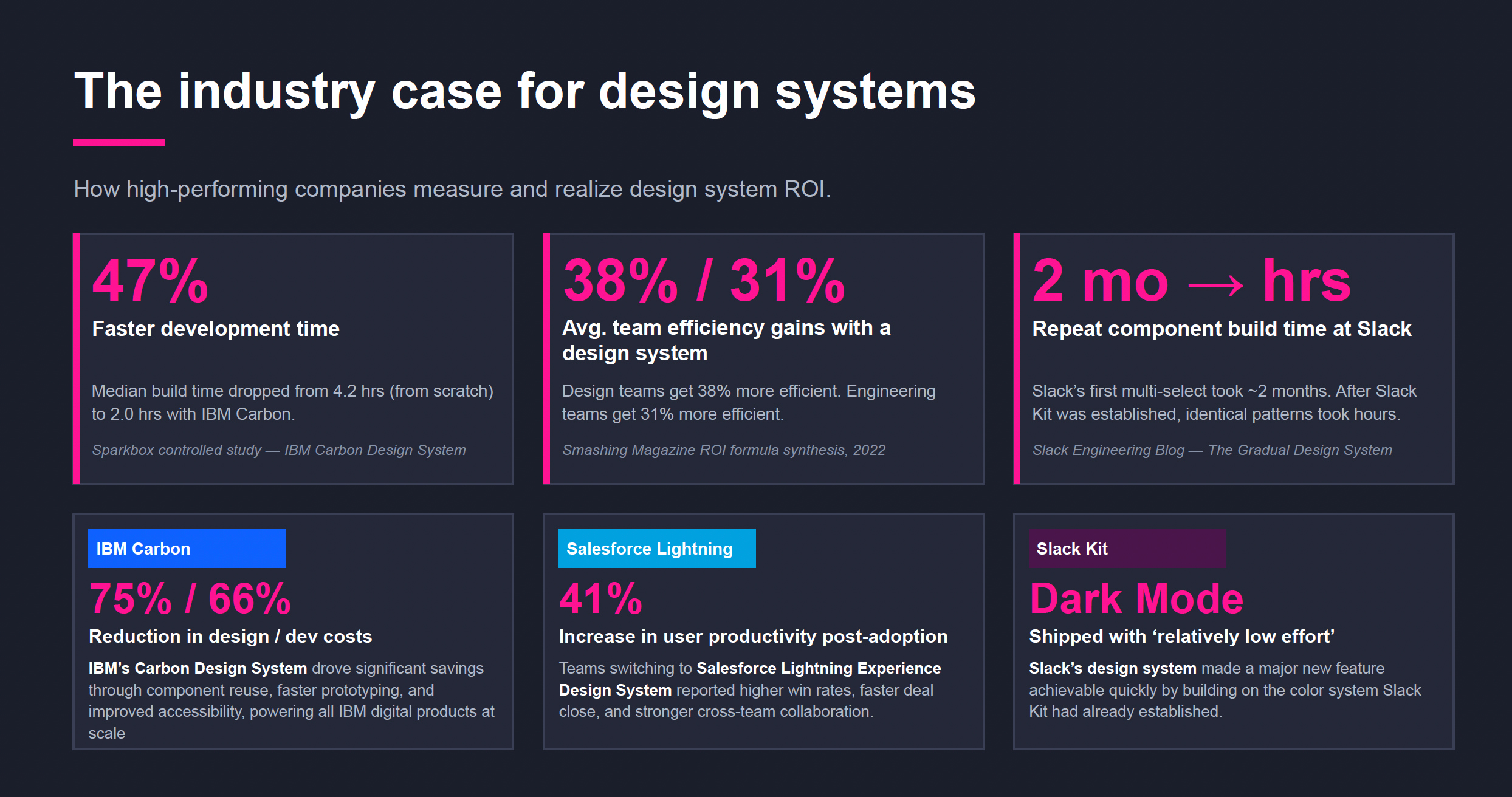
- Benchmarked against industry standards for how mature organizations resource and govern design systems
The Executive Presentation
I authored a full executive briefing solo and presented it to the CPO and senior leadership. The argument was singular: Pando behaves like infrastructure and needs to be resourced like infrastructure. Underinvesting in it costs more than investing in it does.
The briefing covered current state, adoption trajectory, the staffing gap, the risk of inaction and a concrete proposal for what adequate investment looked like. No design jargon or component diagrams. Business outcomes, delivery risk and organizational clarity.
The EPMO partnership
Making the case was one thing. Executing against it required organizational reach beyond what I had alone. I partnered with the head of engineering and EPMO to formalize the migration initiative and build a framework for measuring Pando’s ROI.
- Collaborated with the head of engineering and EPMO to assess migration scope across 60+ codebases
- Identified which codebases required active migration and which would be sunset or merged, sharpening the real adoption picture significantly
- Initiated a measurement framework built around component reuse analysis, defect rate comparison and a controlled build study benchmarked against industry research
- Established shared accountability between design, engineering and EPMO for migration progress
What Was Secured
For the first time, Pando has dedicated, experienced engineering leadership. A principal engineer from Pluralsight’s enterprise architecture team and a senior engineering manager were assigned to the system. The fact that enterprise architecture is now involved is itself a signal: this is no longer a design team concern. It’s an organizational infrastructure concern.
Engineering leadership subsequently mandated Pando for all new product development and began integrating it into their agentic engineering practices. Pando now has a published skill in the Claude Code marketplace and an MCP server keeping component guidelines in sync with documentation automatically. A design system with marketplace presence and live toolchain integration is living infrastructure, which is exactly what the original argument said it needed to become.
First time
Dedicated, experienced engineering leadership assigned to Pando
C-suite
Executive briefing authored solo and presented to senior leadership
Mandated
For all new product development org-wide
Agentic
Engineering teams now building AI workflows on top of Pando
Why It Mattered
Getting executives to invest in infrastructure they can’t see requires more than a good argument. You have to speak their language: delivery risk, business consequence, ROI. Design system value is deferred by nature. The teams investing now are the ones who ship faster, with less rework, a year from now. Engineering leadership acting on that argument is the real outcome. The agentic workflows building on top of Pando are proof it landed.