
Outcomes-Based Roadmapping: Turning Strategy into Reality
Role: Head of Experience Design
Company:Webster Bank
Sector: Enterprise UX, Fintech, Agile Transformation
The Challenge: A Culture Stuck in the Feature Factory
The organization was operating with rigid, feature-based roadmaps that prioritized deadlines over outcomes.
- Projects were waterfall-in-sprints with little agility
- Roadmaps were built for presentations, not delivery
- Research was considered optional, if at all
- Priorities were reactive—based on competitor parity or internal assumptions
- Funding was project-based, not team-based, creating instability and delay
The result? A cycle of waste, missed customer needs and UX viewed as “finishing work,” not a driver of strategy.
My Mandate
Introduce a new approach to roadmapping—one that emphasized outcomes over output, built confidence in UX as a strategic function and planted the seeds for true Agile transformation.
What I Did
Reframed the Roadmap as a Strategic Tool
- Created a living roadmap centered on customer outcomes, not a static “train schedule”
- Organized work by themes and time horizons (Now, Next, Future, Future++)
- Defined each initiative by:
- Beneficiary (who benefits)
- Customer need (problem to solve)
- Business objective
- Team ownership
- Confidence level based on research vs. assumptions
Made Research Non-Negotiable
- Advocated internally for continuous discovery
- Showed how outdated assumptions and internal bias led to wasted effort
- Created preambles to roadmaps to set expectations and clarify purpose
- Socialized the idea that “your customer’s last best customer experience becomes their barometer for everything going forward,” whether it’s Netflix, Amazon, Uber, etc.
Influenced Top-Down Change
- Authored a “Running the Business” document for senior leadership
- Outlined the gap between stated Agile intentions and actual practice
- Introduced outcomes-over-output as a new operating lens
- Pushed back on the demand for a rigid roadmap by explaining why learning, flexibility and iteration are vital
- Sent a “manifesto-style” email that gained traction across leadership
- Ultimately influenced the CIO org to purchase and distribute copies of Outcomes Over Output to all team members
Built the Process Around Value
- Embedded consistent design principles into the team’s planning
- Aligned roadmap items with operational priorities and key journeys
- Accounted for research confidence when prioritizing initiatives
- Built the roadmap as a tool that fostered shared understanding, not just planning
The Results
- Nielsen Norman Group selected the roadmap as a model for upcoming trainings
- UX began to be seen as a critical strategic partner, not just UI delivery
- Team vs. project funding identified at the executive level as a blocker
- CIO org distributed “Outcomes Over Output” to every employee
- Tiger teams were launched to solve systemic delivery issues
- QA and UX began embedding into a continuous delivery model
- Sparked meaningful org-wide dialogue around prioritization, agility and customer value
Why It Mattered
This was about more than roadmapping: it was about shifting how the organization defined success.
By connecting UX work to outcomes, challenging old assumptions and elevating research as a core operating function, we reestablished the role of design as a strategic multiplier, not a finishing touch.
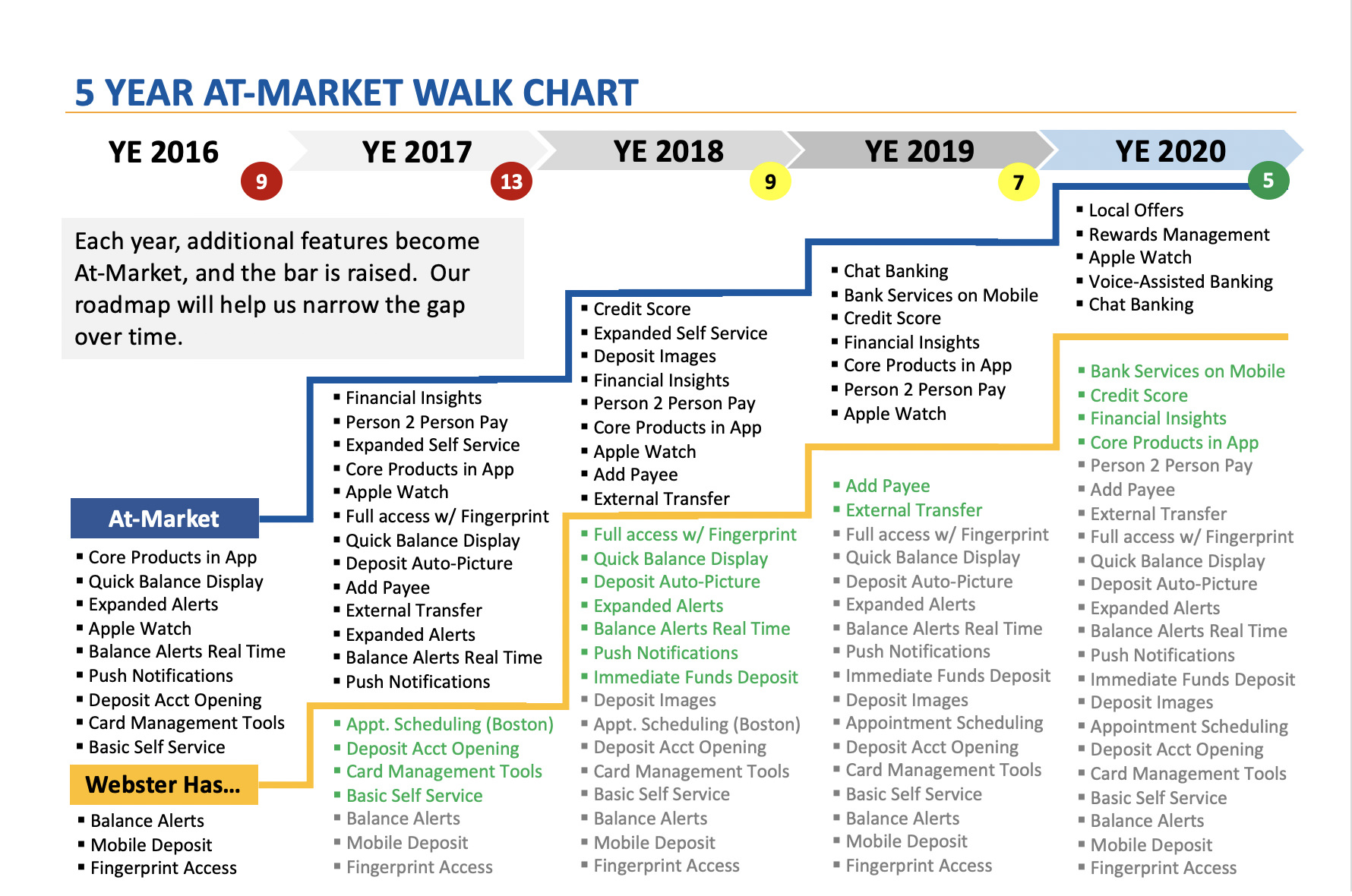
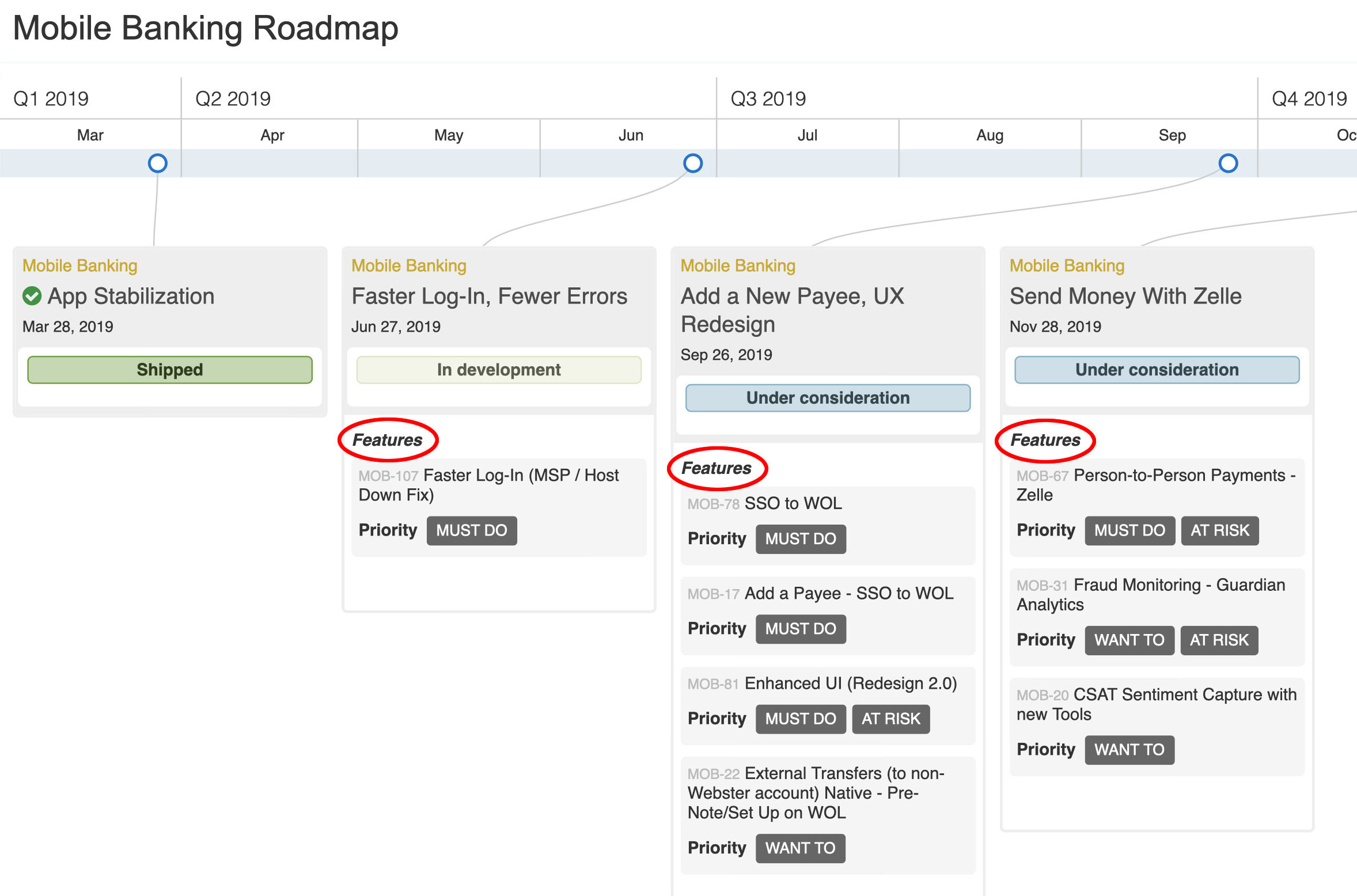
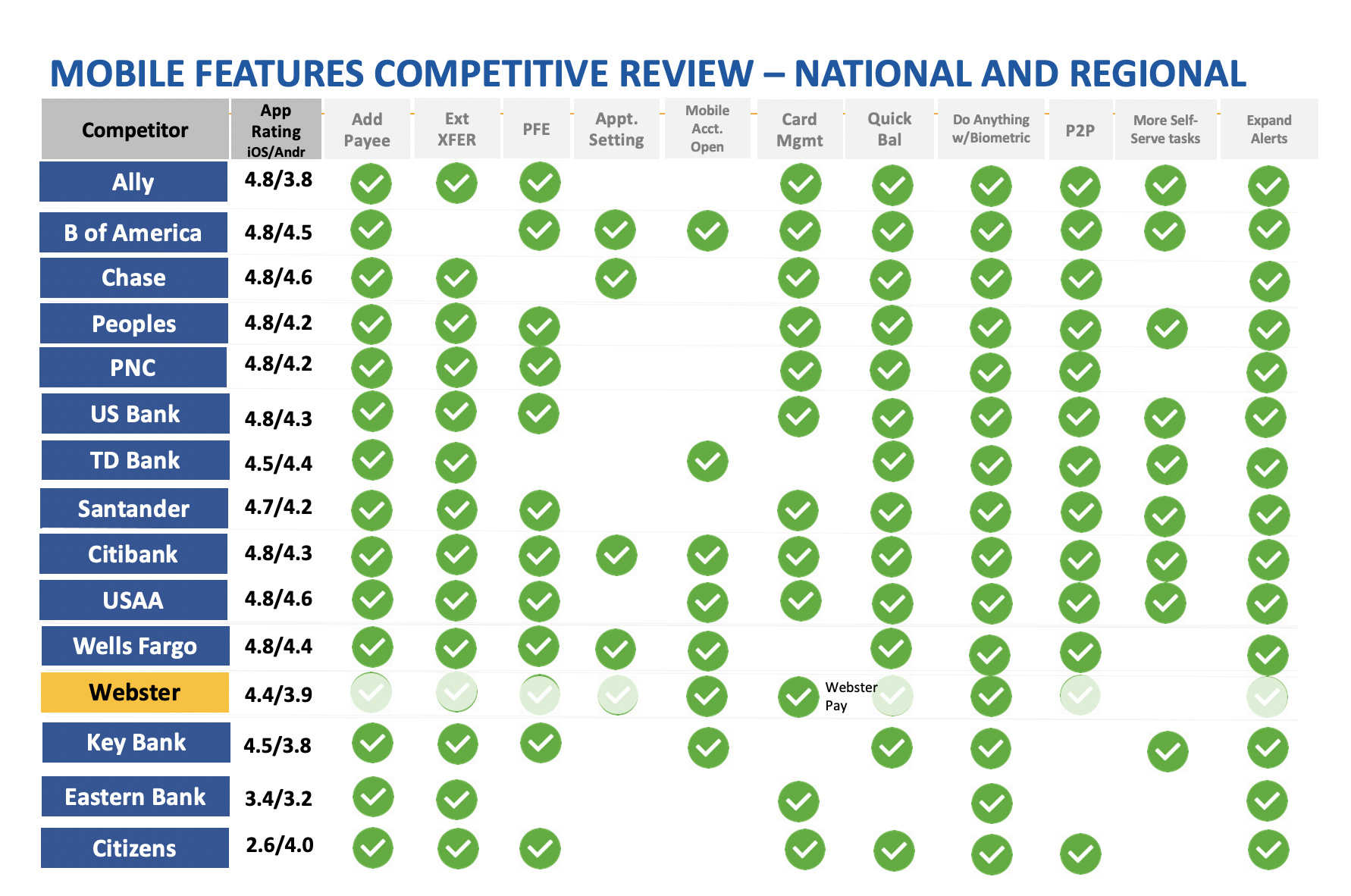
Old waterfall, “feature-factory” and “feature parity” roadmaps that I was advocating for moving away from.
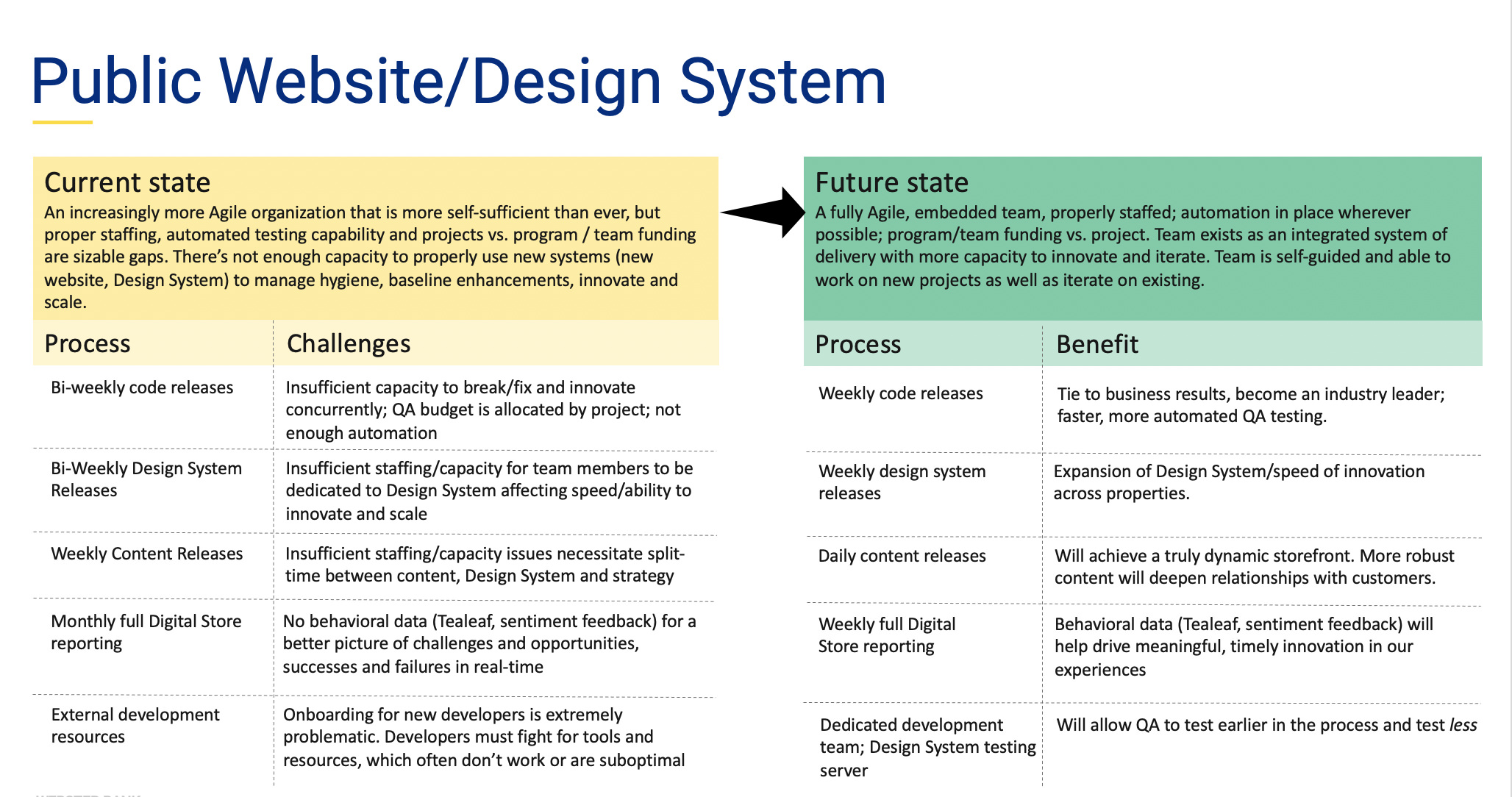
“Running the business” document to share with senior leadership. This document highlighted current state + existing gaps and impact as well as desired future state + expected benefit. I focused our efforts on the operational issues we were experiencing, including not really behaving like an agile organization; staffing shortages; project instead of team funding; process inefficiencies. I worked to highlight what we needed in order to achieve our target state: a continuous, integrated stream of delivery. It was here that I first introduced the concept of outcomes over output.
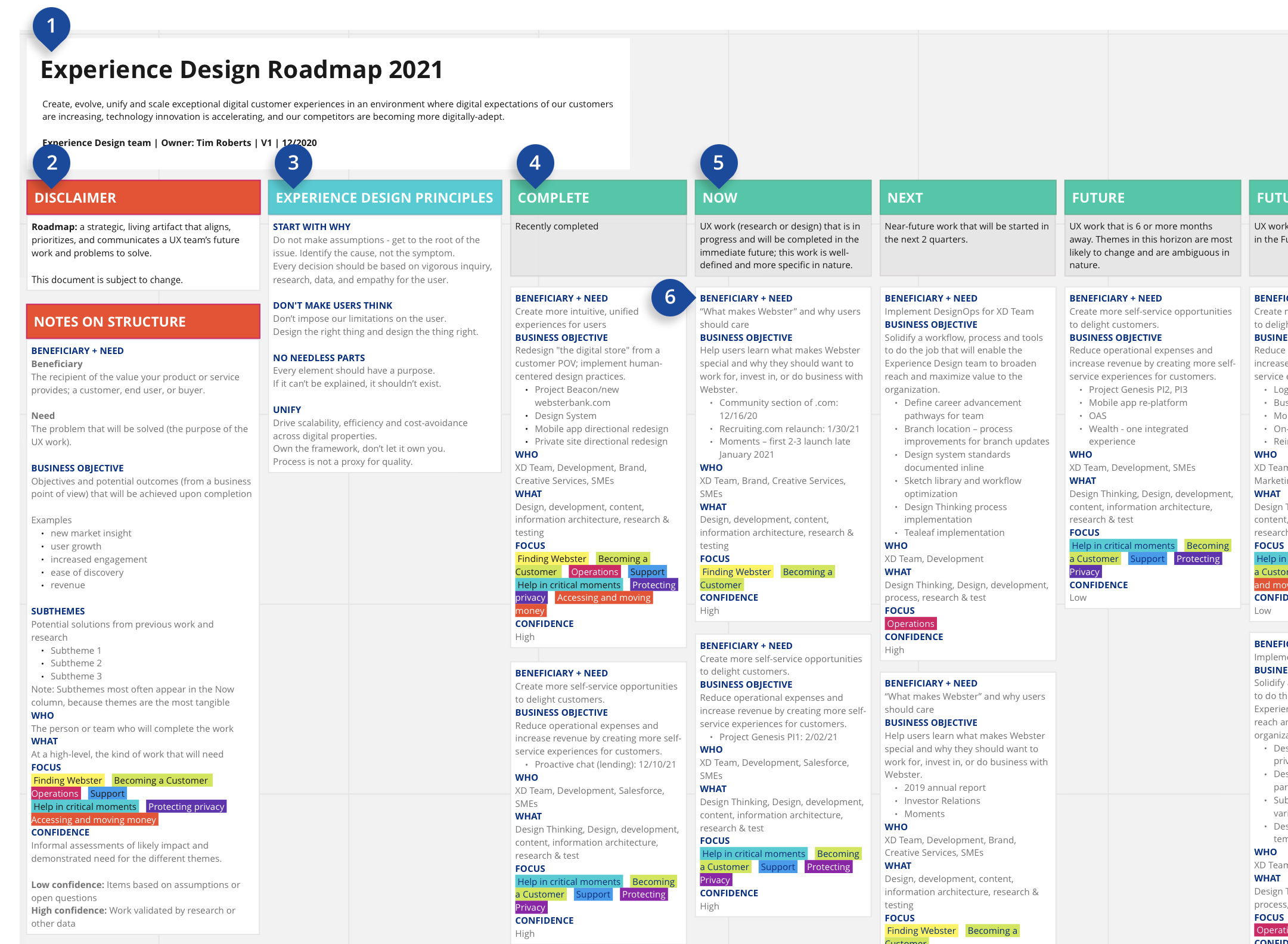
Experience Design roadmap – selected by Neilson Norman Group as a model for upcoming trainings
Outcomes-focused roadmap for Experience Design Team
1. This section answers:
- What is this
- What are the high-level strategic goals?
- Who owns it?
- When it was last updated
2. This sets up the roadmap: what it is, how it’s structured and that it’s a living document, subject to evolution. Of note: we’re defining each theme here and how to create a new one. Beneficiary + need, business objectives, focus and confidence are clearly explained.
3. This is why we do what we do and the filter through which we run all of our work.
It’s a living reminder that this process works and provides value.
4. The roadmap is organized by broad time horizons: Now, Next, Future, and Future++.
5. The only time we get more specific with timing in a roadmap like this is in the “Now” column, because we have more clearly defined, likely in-progress work.
6. Each card is organized the same.
- Beneficiary defines the recipient of the value our works provides
- The need is the purpose of the UX work.
- Business objective is what we’re trying to achieve with this work. This could be more knowledge, hitting revenue targets, new market insights, etc.
- Who & What identifies the teams or people that will be responsible for the work, as well as anticipated deliverables.
- Focus is how we align the work to broader objectives. In our case, there are operational aspects of this (process, tools, UX maturity) as well as key customer journeys that we’re working to improve upon
- Confidence – how confident are we in this theme of work? Research-based or assumption-driven? The former is high confidence; the latter is not.