
Fixing Digital Account Opening Through Service Design
Turning a 2.2% conversion funnel into a competitive acquisition channel by mapping the whole service, front stage and back.
Webster’s consumer account opening flow had missed its digital acquisition target four years running. Inside Project Beacon, I led the workstream that fixed it. I introduced service design to a bank that had never practiced it, used journey mapping and service blueprinting to expose where customers were breaking down and partnered with compliance, fraud and the call center to change the parts nobody wanted to touch.
600%
Increase in application starts
320%
Increase in completed submissions
40%
Growth in digital account acquisition
$365K
Annual avoidable call center cost identified
THE OUTCOME: A Customer-First Application Flow
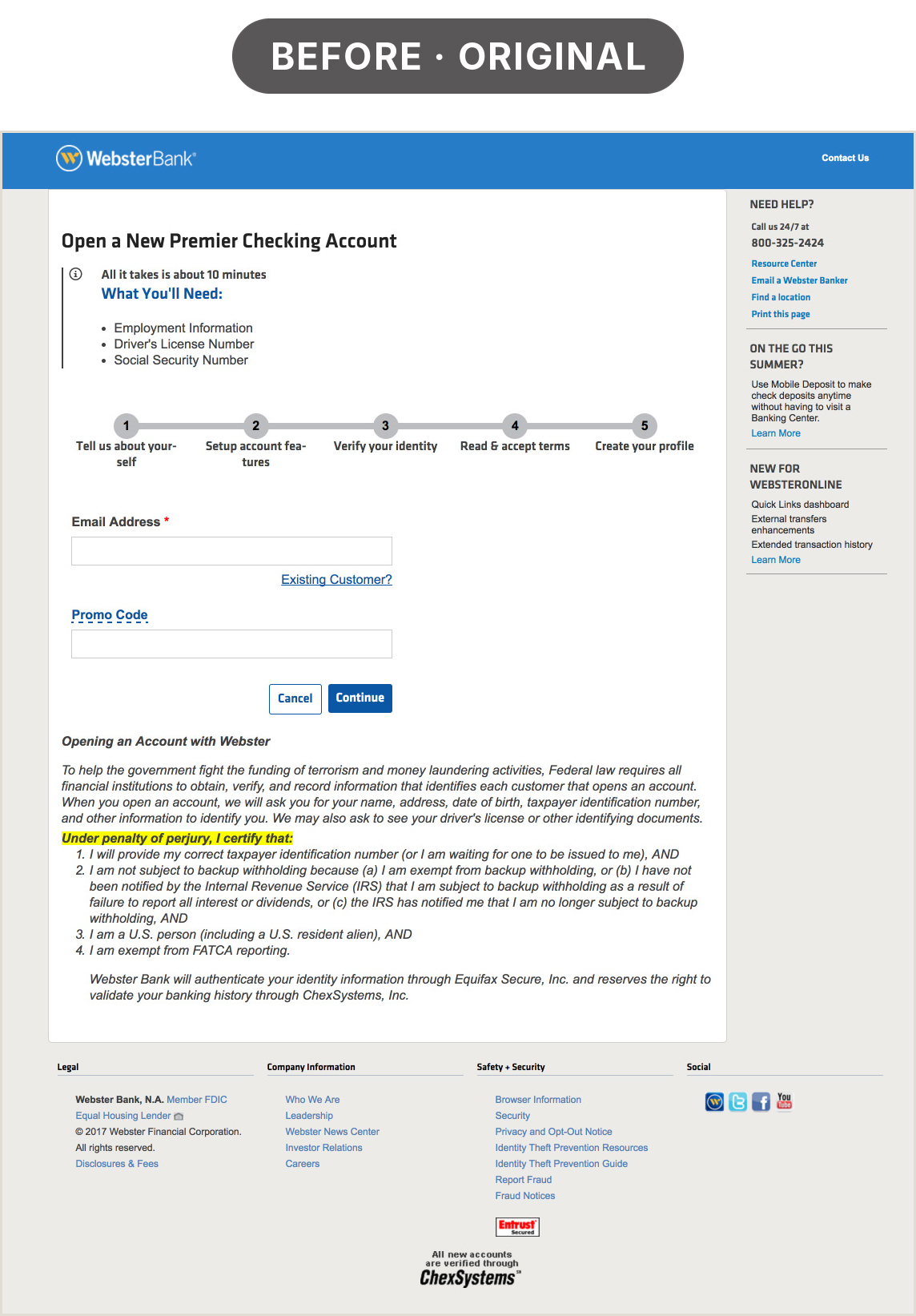
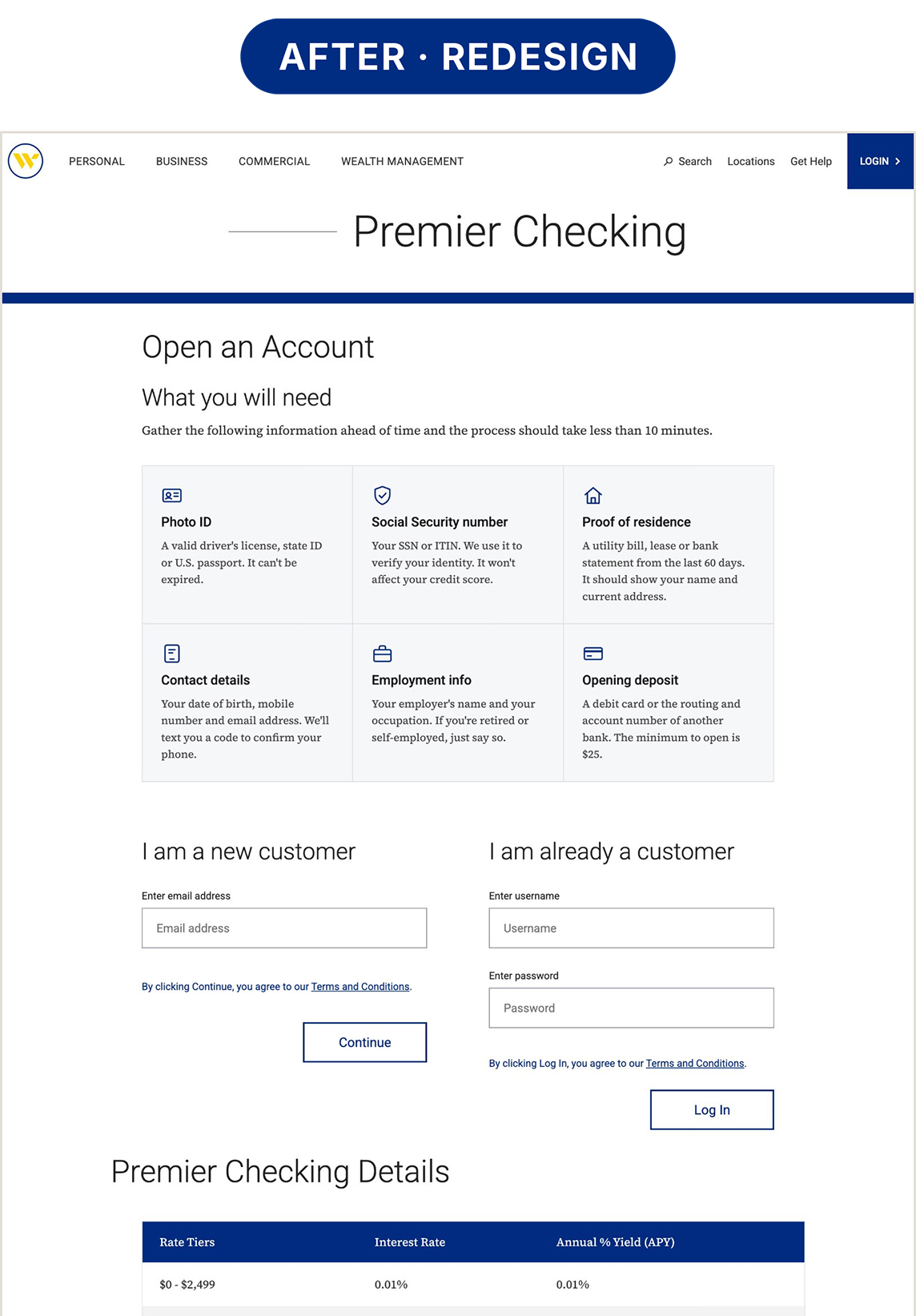
[BEFORE / AFTER]: A perjury warning on the first screen and 14 screens of manual entry, replaced by a clean entry point, a shorter flow and earlier ID verification.
Problem
- Four Years of Flat Acquisition: The share of accounts opened digitally hadn’t moved in four years while the target kept climbing. The application converted at 2.2% from start to submit against an industry average of around 50%.
- A Waterfall Legacy: Webster historically funded projects, shipped them and moved the team on. Once the account opening flow went live, nobody owned it. It drifted for years and ended up shaped by compliance requirements far more than by what a customer could realistically finish.
- A Hostile First Impression: The first screen opened with “Under penalty of perjury, I certify that:” before a customer had typed a single field. From there it was 14 screens and 42 fields, with no way to save and return.
- Unreliable Identity Verification: The Equifax integration was down 13% of the time, and another 10-12% of customers failed the check outright. Either way, they had to start over. Funnel data showed a 66% drop at that single step.
- Customers Pushed Offline: Customers who called for help also had to restart, because the call center couldn’t pick up where the application left off. Roughly 4,000 customers a month ended up in a branch or on the phone.
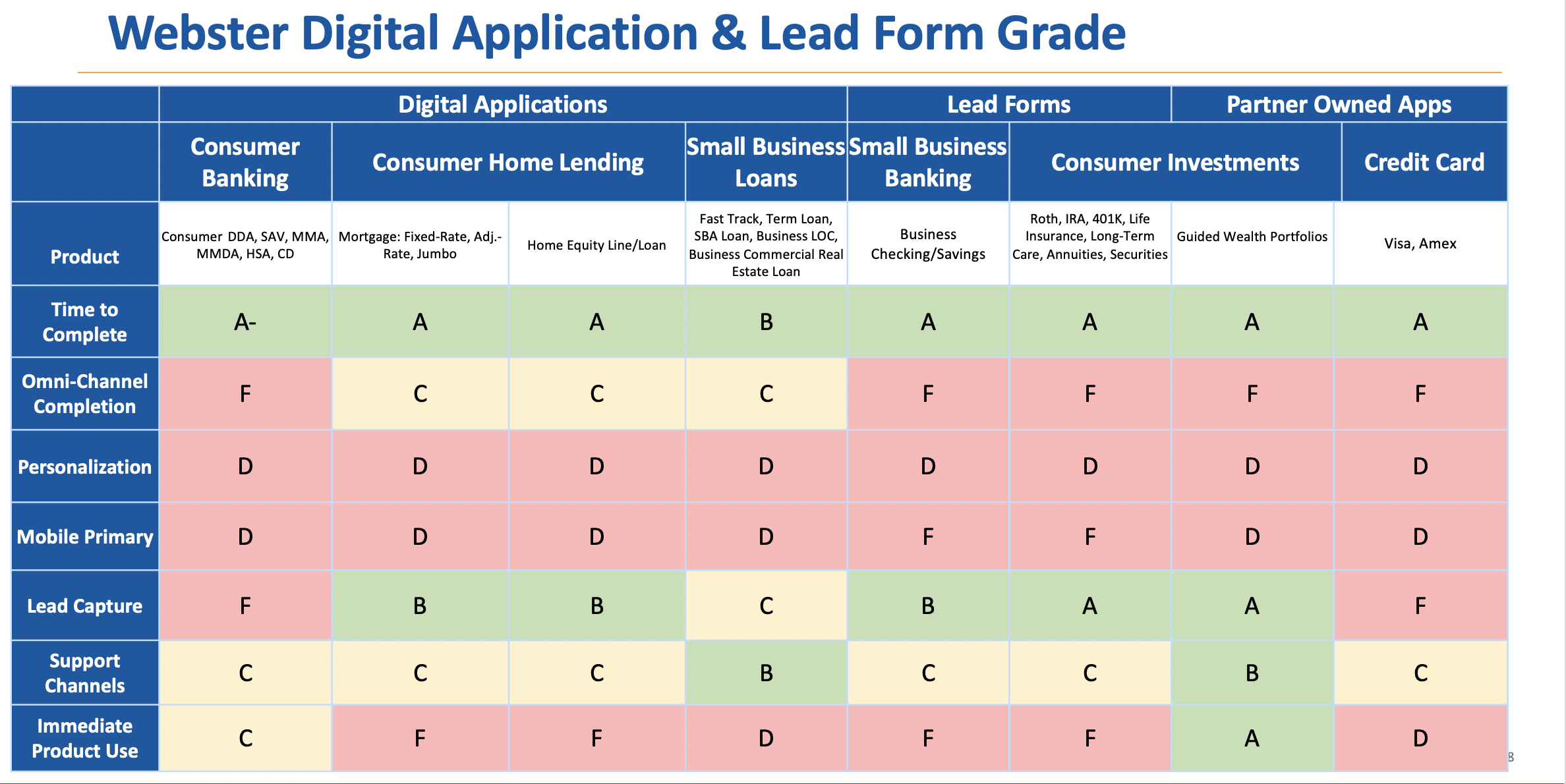
[BEFORE] THE EXPERIENCE, GRADED: An audit across seven dimensions. Consumer Banking failed nearly every one that drove acquisition and retention.
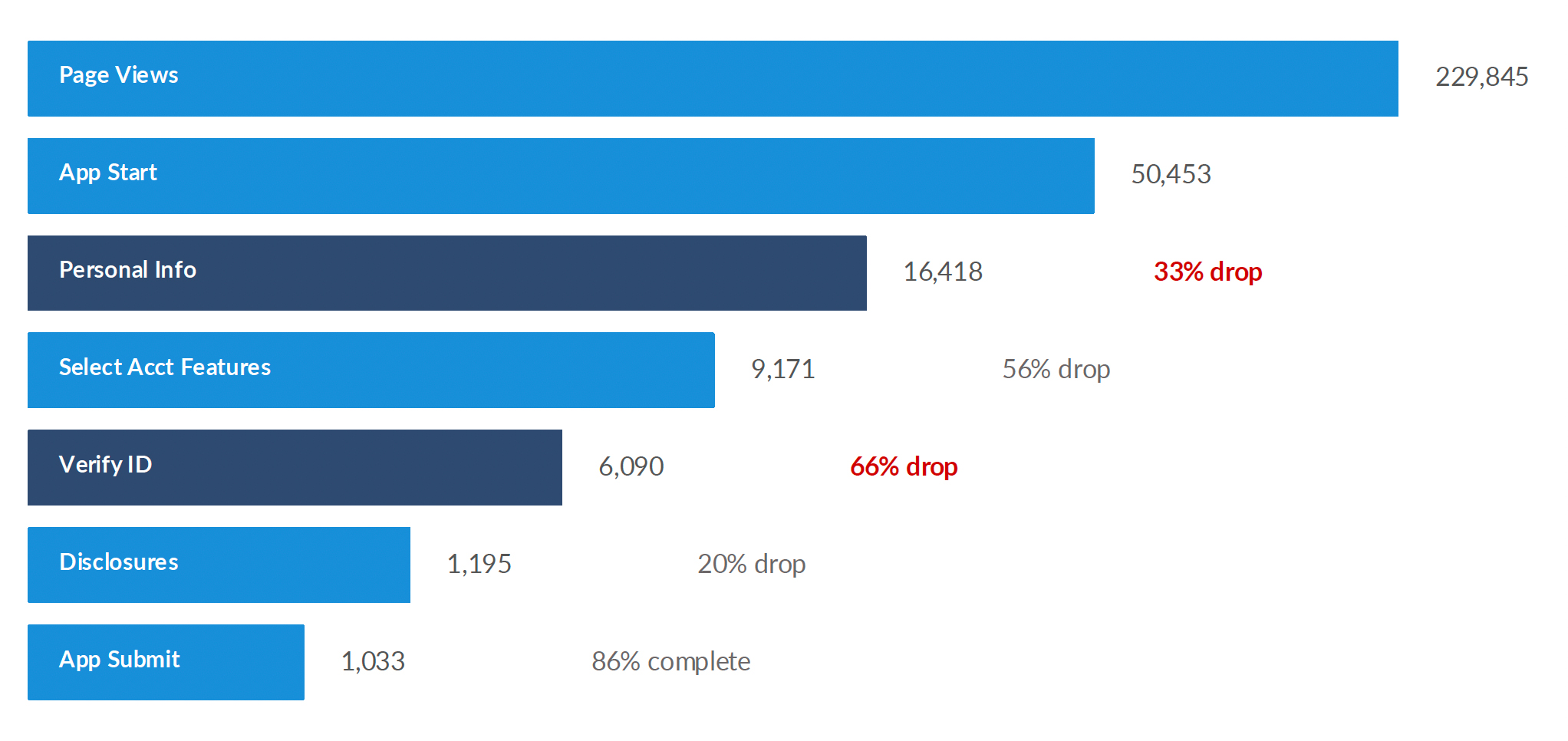
[BEFORE] WHERE WE WERE LOSING PEOPLE: [BEFORE] 2019 funnel data showing the steepest drops at Personal Info and Verify ID.
Approach
Webster had no service design practice. I introduced it and my team didn’t touch a screen until we understood the full experience, including everything happening behind it.
Current State Journey Mapping
We mapped the experience across all three entry paths: prospect, new customer and existing customer. I was careful to separate this from what marketing called journey maps. Ours made every friction point and system failure visible, from the first click through funding and onboarding.
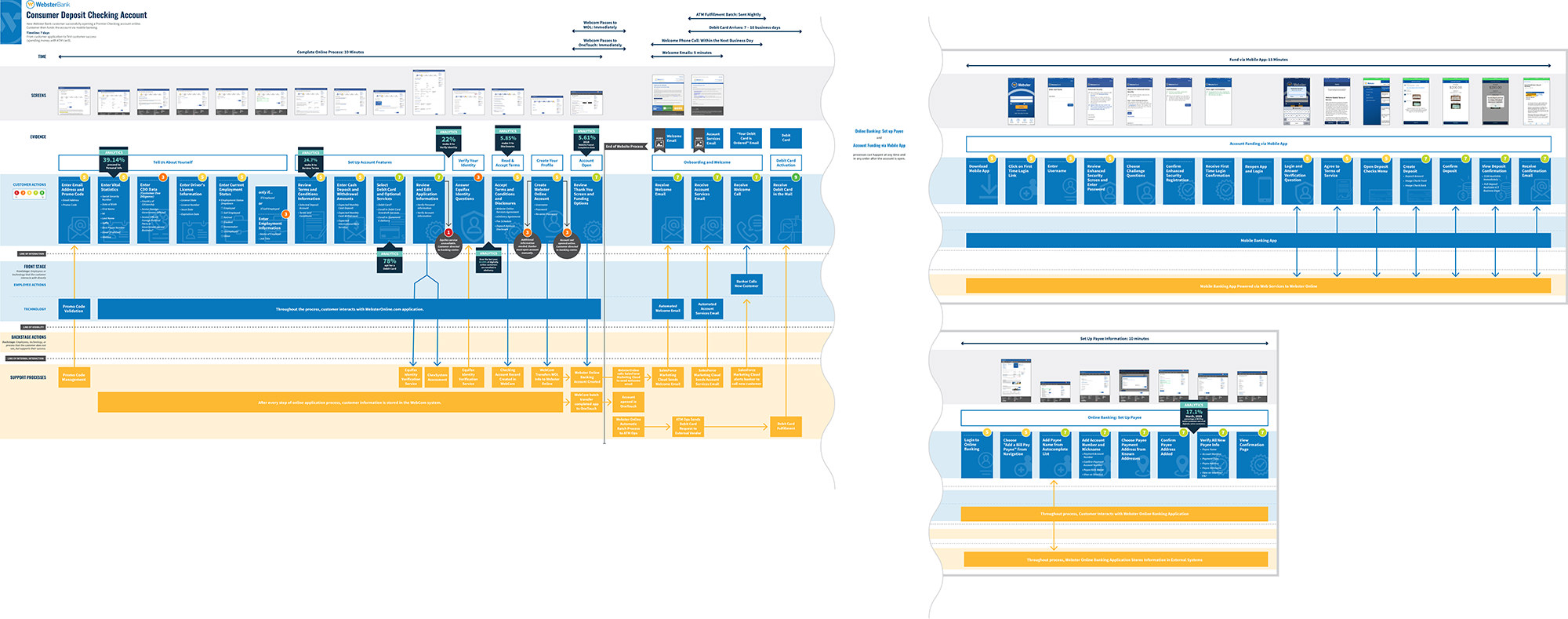
Current-state customer journey map across the full application, funding and onboarding experience
Service Blueprinting
I introduced the service blueprint as the employee-facing companion to the journey map. It showed which systems, teams and processes sat behind every customer moment. That made the black holes visible to people who had never seen the experience end-to-end.

Scroll sideways to explore the full blueprint, or open it full size.
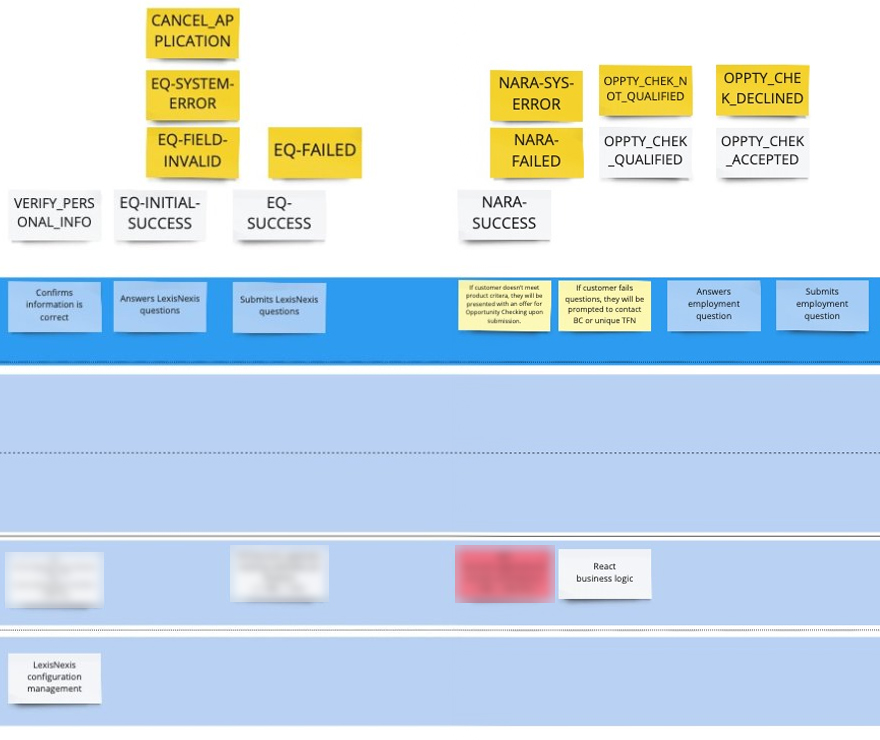
A closer look at identity verification. Each yellow note above the customer’s actions is a way the check could fail and most of them sent customers back to the start.
Call Center Partnership
My team shadowed call center agents and interviewed them about the calls they handled most. They knew exactly where customers were breaking down. Nobody at the bank had ever asked them.e this from what marketing called journey maps. Ours made every friction point and system failure visible, from the first click through funding and onboarding.
Sequencing the Work
With the head of acquisition and her team, I used an importance and difficulty matrix to set the order. Quick wins shipped first: onboarding drip campaigns, better confirmation emails and disclosures combined into a single checkbox. Mid-tier work followed, including earlier ID validation, consolidated employment fields, chat support and an onboarding to-do page. In-app funding and full omnichannel completion were sequenced for later phases.
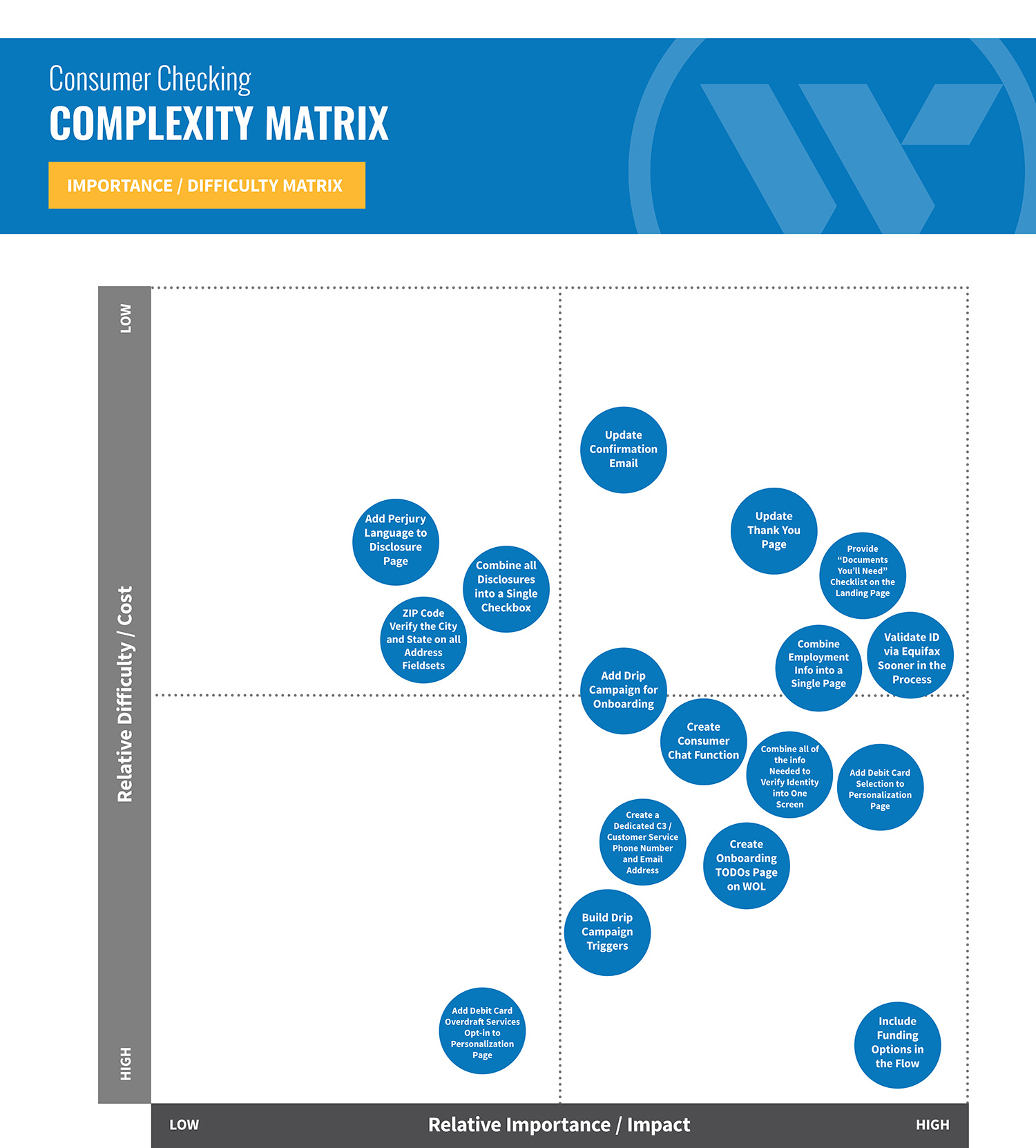
Consumer checking importance and difficulty matrix used to sequence the roadmap
Leadership & Obstacles
- Introducing a New Discipline: Service design was unfamiliar at Webster, and the instinct was to start redesigning screens. I held the line on mapping first. Showing stakeholders what their customers were going through did more than any pitch for design could.
- Fixing What Nobody Wanted to Touch: Compliance and fraud were most nervous about identity verification, the step causing the biggest loss. A working control, even a bad one, felt safer to them than change. I framed it as a sequencing fix: catch a failed check early, before a customer had invested ten minutes in the application. It took repeated working sessions with the vendor and both teams to get there.
- Shortening the Application With Legal: In parallel, I made the case to legal for a shorter flow that kept every required disclosure. Both changes shipped.
- Turning the Call Center Into an Ally: When agents saw their own pain points surface in the research, buy-in stopped being a design ask. It became a shared business problem across silos.
Why It Mattered
- A Lasting Practice: Service design became part of how the team worked, giving Webster a repeatable way to see across channels and silos.
- Measurable Cost: At the bank’s own estimate of $7.61 per call, diverted customers were costing about $365,000 a year in avoidable call volume. The research put a number on a problem everyone had felt but nobody had sized.
- Conversion Recovered: Digital account acquisition grew 40%.
If I Ran This Today
An AI pass across call transcripts and ticket data could surface the top failure patterns in days, then get confirmed directly with agents. I’d also push harder on AI-assisted identity verification to go after the downtime and failure rates at the source. AI compresses the synthesis. People still make the judgment calls that follow.